Choose one detail with a clear purpose
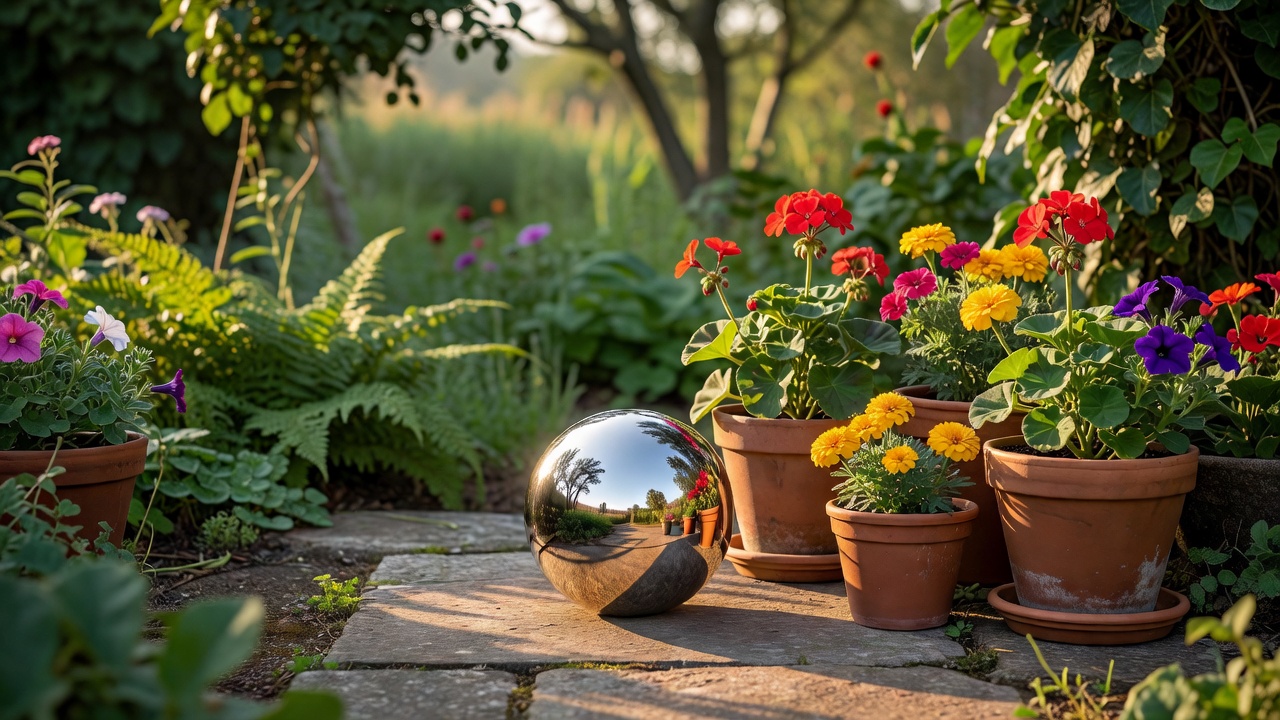
Reflective decoration works best when it gives the eye a small discovery rather than a constant distraction. Choose one corner, then decide what you want the object to do: catch a soft patch of daylight, echo the flowers or mark the edge of a seating area. If it has no clear role, leave it out until the planting and furniture are settled.
A brushed-metal planter, a small outdoor-rated ornament or a subtly reflective tray can suggest a disco mood without a motor or spotlight. You do not need a revolving ball hanging above every chair. Use the everyday setting as your guide: the same object that feels playful among generous planting may look intrusive on an otherwise quiet balcony.
Check materials before chasing the shine
Indoor mirror balls are not automatically suitable for outdoor use. Adhesives, backing materials and suspension components can deteriorate in moisture or strong sunlight. Choose products expressly intended for the exposure you expect, and follow their care and installation instructions. “Decorative” is not the same as weatherproof, and a homemade coating does not establish an outdoor safety rating.
Inspect glass or mirrored pieces for sharp edges and loose fragments. Around children, pets or busy seating, a non-shattering alternative may be more appropriate. Even metal needs attention: damaged finishes can corrode, edges can be sharp, and exposed surfaces may become hot in sunlight. Bring temporary decorations indoors after use rather than expecting them to survive every season.
Treat sunlight as a moving condition
Test a proposed position at several times of day and consider how the sun’s path changes through the year. A reflection that misses the table in the morning may point directly into a neighbour’s window later. Sit in each chair, stand on the approach and check nearby windows. If the light feels dazzling or distracting, change the position or choose a less reflective finish.
Avoid concave mirror-like surfaces and objects capable of focusing sunlight. Concentrated sunlight can create a fire risk near dry foliage, timber, fabric or other combustible materials. Do not assume that a shaded position will stay shaded all year. If you cannot confidently assess the object and site, choose a matte decoration instead; the retro character can come from colour and shape.
A placement sketch, not an installation plan
Put sparkle at the edge of the composition. Keep doors, steps, emergency access and everyday movement clear.
Think beyond the view from the chair
Large garden mirrors can resemble an opening or another stretch of habitat to birds. We do not recommend adding a broad, mirror-like panel simply to make a garden appear bigger. A small textured accent is a more restrained styling choice, but it still deserves observation. Remove or reposition any object if birds investigate it repeatedly or seem disturbed.
The British Trust for Ornithology and RSPB offer wider information on garden birds and collision concerns. Their inclusion here is informational, not an endorsement of a particular decoration. Keep ornaments away from nests, feeding stations and wildlife routes, and avoid pairing reflections with bright light directed into vegetation.
Secure it, inspect it, simplify it
Never hang a heavy object from a branch, pergola or fence without establishing that the support and fixings are suitable. Wind adds movement and load. Use manufacturer-approved attachment methods, inspect them before gatherings and remove temporary hanging decorations before adverse weather. Keep suspended items away from head height and routes where guests may reach up or brush against them.
Before people arrive, make one deliberate circuit of the space. Look for loose pieces, unstable bases, glare, sharp edges and anything newly hidden by plant growth. Afterwards, wipe down suitable surfaces and store delicate items dry. A small ornament that you can maintain easily is a better long-term choice than an impressive display you are reluctant to handle.